IBC 2025 Already Built Your Target List — You Just Haven't Pulled It Yet
IBC 2025. Your ICP: Series-B SaaS, media tech vertical, 50–500 employees. ExpoGage returns 18 accounts. Broadpeak Technologies: score 94, CTO and VP Engineering identified. Accedo: score 88, CEO, VP Sales EMEA, and Head of RevOps identified. That is not a list. That is a sequence.
You didn't book a flight. You didn't staff a booth. You didn't walk 600 exhibitors across four days in Amsterdam. You ran your ICP against a structured exhibitor dataset and got 18 accounts that match on firmographics, vertical, funding stage, and demonstrated market commitment — before the show floor opens.
Attending IBC 2025 is optional. Accessing the signal it produces is not. Every year, 1,700+ exhibitors publish their presence in advance. Most sales teams treat that as an event logistics footnote. The teams closing deals in media tech treat it as a prospecting event.
Why Exhibiting at IBC Is a Buying-Intent Signal, Not Just an Event Logistics Decision
Here is what it costs a company to exhibit at IBC 2025: booth space in the RAI Amsterdam, freight and stand construction, travel and accommodation for sales and technical staff, and three to five days of productive time pulled from the field. Conservative estimate for a mid-market SaaS company: €40,000–€120,000 all-in.
That is not a passive signal. That is a financial and organizational commitment to a vertical, made months in advance, by people with budget authority.
Most intent data tools surface page visits, content downloads, and retargeting clicks. Those signals require nothing more than a browser and idle curiosity. A confirmed booth at IBC requires a signed contract, a purchase order, and a decision made at the VP or C-suite level. The intent is real, the timing is known, and the vertical alignment is self-declared.
For ABM, the trifecta is intent plus fit plus timing. IBC exhibitors hand you all three simultaneously. A company that fits your ICP, operates in media tech, and has committed to a physical presence at the industry's flagship show is not a cold prospect. They are an active market participant who has already voted with their budget.
This is why the exhibition graph is a superior intent signal for certain B2B segments — not because it replaces web behavior data, but because it requires real resource commitment, not just a page visit. The signal predates any CRM activity on your side. ExpoGage's dataset captures it at the moment it becomes observable: when the exhibitor list is published.
The Five Inputs That Turn an Exhibitor List Into a Scored ABM Target List
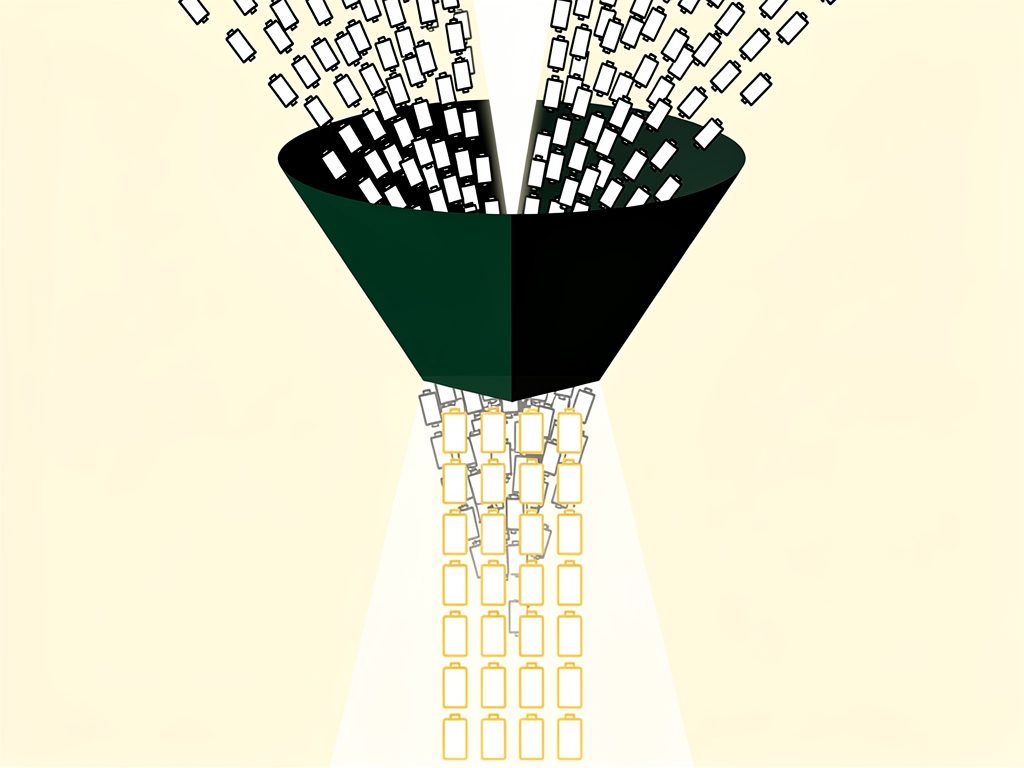
IBC 2025 lists 600+ exhibitors. Your ABM motion works with 18–20. Here is the scoring logic that compresses one to the other.
- ICP firmographic match. Start with the raw exhibitor list filtered against your defined firmographics — industry classification, revenue band, geography, and business model. For a media tech SaaS vendor, this immediately removes hardware manufacturers, consultancies, and broadcast infrastructure players who will never be buyers.
- Vertical alignment within the show's category taxonomy. IBC organizes exhibitors by product zone and technology category. A company listed under Cloud & Virtualization or Content Everywhere is signaling a different buying center than one listed under Cameras & Lenses. Match your solution category to theirs, not just the show's vertical at large.
- Employee count and funding stage signals. A 12-person pre-seed startup and a 400-person Series-B company both exhibit at IBC. Only one is in your ICP. Filter on employee range and, where available, funding stage — both are structural signals about deal size, sales cycle, and organizational readiness to buy.
- Booth presence as a proxy for active budget. Booth size, location in the hall, and first-time versus returning status all correlate with budget posture. A company that upgraded from a shared pavilion to a standalone stand is signaling growth investment. That is the account you want in your sequence this quarter, not next year.
- Repeat exhibitor status as a conviction multiplier. A company exhibiting at IBC for the third consecutive year has made a recurring strategic bet on this market. That consistency is a conviction signal — they are not testing the category, they are operating in it. Weight repeat exhibitors higher in your scoring model.
Apply these five filters sequentially and 600+ exhibitors become 18–20 accounts with a defensible reason to be on your list. For a deeper look at how exhibitor data feeds into a full outbound motion, see our exhibitor data outbound and ABM guide.
From Account Name to Buying Committee: Closing the Gap Between the List and the Sequence
The most common failure point in event-driven ABM is not the list — it is the gap between the account name and the first email sent. You have Broadpeak Technologies at score 94. Now what?
For a media tech SaaS vendor, the buying committee at a Series-B company typically comprises three roles: the technical decision-maker (CTO or VP Engineering), the commercial owner (VP Sales, Chief Revenue Officer, or Head of RevOps), and the executive sponsor (CEO or COO at this company size). These are the three contacts you need identified before you write a single line of outreach.
The scored account list is the input. Buying committee identification is the output that makes outreach possible. Without it, you have a research deliverable, not a sequence.
Timing matters as much as the names. Consider what was visible in the IBC 2025 exhibitor list six weeks before the show opened: three of your closest competitors had confirmed booths in Hall 7. One of them was new to the show. Another had moved from a 9-square-meter stand to a 36-square-meter feature booth. The third had added two co-exhibiting partners you hadn't seen before.
That is not event trivia. That is a competitive positioning update, a partnership intelligence signal, and a customer-vulnerability alert — all in one exhibitor list. Most teams learned about it on the show floor. ExpoGage surfaces it at the moment it's still actionable.
If three competitors already have booths, those buying committees are already being worked. The contacts at Broadpeak and Accedo are receiving outreach from your competition right now. The accounts that scored 88–94 on your ICP are not going to wait. First contact with a relevant, personalized message — anchored to the fact that you know they're investing in this market category — is the differentiator.
How to Replicate This for Any Show Without Attending or Scraping Manually
The IBC methodology is not IBC-specific. It is a repeatable system that works whenever three conditions are met: structured exhibitor data, a consistent schema across events, and an ICP scoring layer applied on top.
The DIY alternative is manual scraping — pulling exhibitor PDFs, normalizing inconsistent formats, deduplicating company names, and rebuilding this process from scratch for every show your team wants to cover. That is a viable approach for one show per quarter if you have a research analyst with spare cycles. It does not scale to a program.
ExpoGage indexes 20,405 events across 138 countries, with 62% returning machine-readable exhibitor lists. That coverage means the same scoring logic you applied to IBC 2025 can run against NAB Show, Mobile World Congress, Gitex, or any media tech and enterprise SaaS event in your target geography — without rebuilding the data pipeline for each one.
IBC is one node in the graph. The methodology transfers because the underlying data structure is consistent. Your ICP parameters stay fixed; the event changes. The output — 15–30 scored accounts with verified vertical alignment and booth-presence signals — is reproducible at scale. For a broader look at how to build this into your revenue team's data stack, see how B2B revenue teams are structuring exhibitor intelligence.
Give Us Your ICP and IBC 2025 — We'll Return the List
The core exchange is straightforward. You define your ICP — vertical, employee range, funding stage, geography, solution category. You name a show. ExpoGage filters the exhibitor graph, applies the scoring model, and returns 15–30 accounts that match — ranked, with the reasoning visible.
No booth. No flight to Amsterdam. No three days walking halls to find the 18 companies you could have identified in advance.
The list exists. IBC 2025's exhibitors have already declared their market intent, their vertical commitment, and their budget posture. The only variable is whether you pull the signal before your competitors do.
Give us your ICP and a show. We'll return the 15–30 accounts that match — scored, with buying committee contacts identified. No booth required. Start with one event →