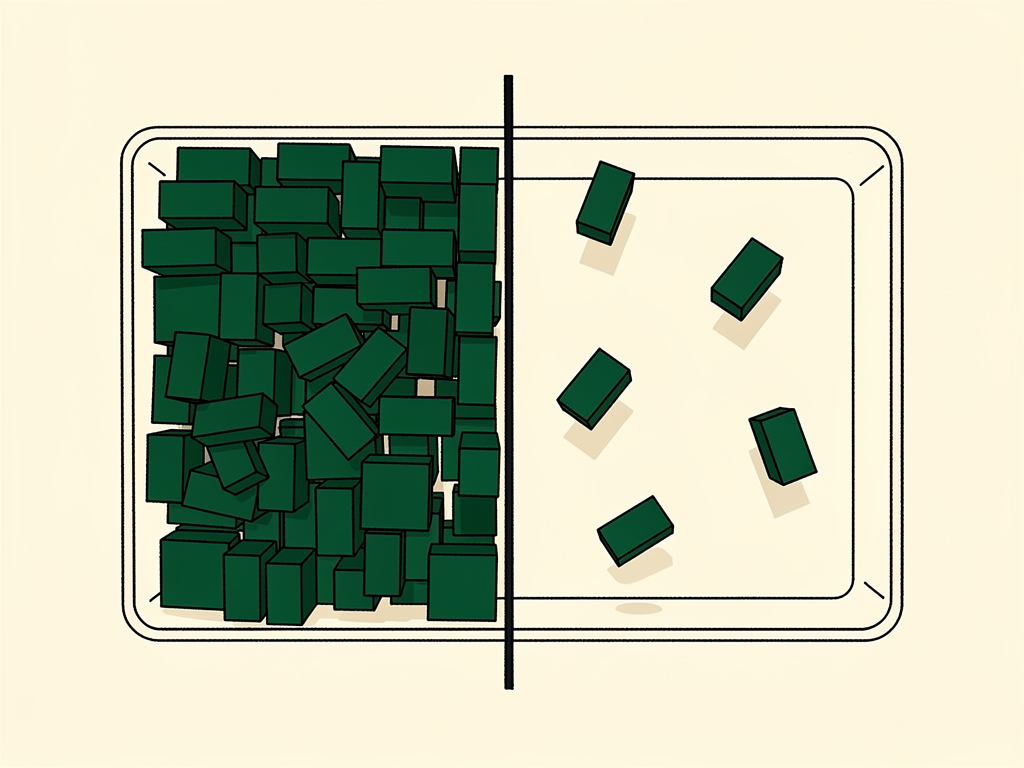
The 85-Day Problem
The exhibitor signed their booth contract 90 days ago. Your competitor reached them 85 days ago. You found the list on the show website last week. In the trade show supply chain, the pipeline is the exhibitor list — and the window closes fast.
That gap is a data infrastructure problem. When a company commits budget to a booth, it signals a purchase decision in motion. Booth space, staff, travel, logistics, and sponsorship add-ons mean the buying cycle is active and decision-makers are reachable. The companies that reach exhibitors early have a structured, maintained feed of exhibitor commitments — one that fires before the show floor opens, often before the event website posts a full exhibitor list. Most outbound teams find the list the week of the show. By then, the best conversations have already happened.
The 90-day contracting window is the signal. Acting on it requires knowing who signed before the organizer publicizes it.
Why Every B2B Team Eventually Tries to Build This Themselves
Trade show exhibitor lists are genuinely good prospecting data. Companies self-select by vertical. Booth investment correlates with budget authority. The list is public, structured by intent, and refreshed every cycle. It's a roster of companies that just raised their hand.
Someone on your team builds a workflow. A VA scrapes PDFs. A growth analyst writes a parser for organizer websites. Someone deduplicates the output against the CRM and loads it into a sequence. It works once, maybe twice, then breaks.
The breakage is predictable:
- Organizer websites restructure their exhibitor pages between cycles. The scraper returns garbage.
- Coverage is uneven — 40 shows tracked well, 200 shows not tracked at all.
- The output is company names, not scored accounts. Someone has to clean it before it's sequenceable.
- The VA who built the workflow leaves. The institutional knowledge leaves with them.
- The team moves on. The workflow dies. The 85-day window keeps closing.
This isn't a failure of effort. It's a failure of scale. The DIY approach has a real cost ceiling — most teams hit it before they've covered more than a fraction of the events that matter to their ICP.
How ExpoGage Started: An Internal Tool That Refused to Stay Internal
ExpoGage started as a problem Skief Labs kept running into while running outbound at scale for B2B clients. Trade show exhibitor lists are some of the richest, most intent-signal-dense prospecting data available, and almost no team was using them systematically.
Skief Labs built an internal pipeline to parse, score, and structure that data for their own client work. The pipeline became the foundation: parsing exhibitor lists across shows, scoring accounts against client ICPs, timing outbound sequences to booth commitment rather than badge scan. It worked because it was maintained. Not scraped once and forgotten. Not dependent on a single organizer's website structure. Built as infrastructure, not a one-time campaign asset.
When the data layer generated more durable value than any individual campaign it powered, the productization decision followed. ExpoGage is that infrastructure without the agency retainer.
What Productized Intelligence Actually Looks Like at the Account Level
The coverage: 20,405 events, 138 countries, 62% of tracked events with machine-readable exhibitor lists. But coverage without structure is just a large spreadsheet.
Consider a mid-size SaaS company selling into manufacturing operations. Their ICP is VP-level and above, companies with 200–2,000 employees, Series B or later. They're deciding whether to exhibit at a regional industrial automation trade show or run pre-show outbound against the exhibitor list.
A raw exhibitor list might return 400 company names. Without scoring, that's a research project, not a target list. With ICP scoring applied against vertical, employee count, funding stage, and prior event participation, that 400 collapses to 18 scored accounts. Those 18 have buying committee contacts identified by function and seniority. The sequence can fire before the show floor opens. The SDR knows which accounts are first-time exhibitors versus repeat exhibitors and can personalize accordingly.
That's the difference between a spreadsheet of company names and actionable pipeline.
The Three Workflows That Break Without This Layer
1. Pre-Show Outbound Sequencing Timed to Booth Commitment
The critical window is 60–90 days after booth contracts are signed, when the exhibitor is in active vendor evaluation mode, budget is allocated, and outreach is relevant. Without a maintained exhibitor data feed, most teams sequence against badge scans or post-show attendee lists. That's the wrong signal, three months too late.
2. Competitive Tracking Across Shows You Don't Attend
Your competitors are exhibiting at shows your team never sees. Their booth presence reveals which verticals they're prioritizing, which geographies they're entering, and which customer segments they're targeting. Tracking competitor participation patterns across shows is competitive intelligence most teams leave unworked. This requires cross-show coverage and consistent data structure. A one-off scrape of a single event website doesn't get you there.
3. Show Selection and Sponsorship Qualification Scored Against ICP Density
Organizers will tell you their show draws 12,000 attendees from 40 countries. They won't tell you how many match your ICP or how the exhibitor mix has shifted over the past three cycles. Sponsorship decisions made on organizer-reported attendance numbers are incomplete. The real question is: what percentage of the exhibitor list matches our ICP, and how does that compare to the other shows we're evaluating?
Give Us Your ICP and a Show
The dataset already exists: 20,405 events, 138 countries, 62% with structured exhibitor data. The intent signals are already in the graph. The only variable is whether your team reaches them in the 85-day window or the week of the show.
Every team that tried to build this internally already knows the problem is real. The VA workflow broke. The scraper stopped working after the organizer redesigned their website. The list came back as 400 company names that someone had to clean.
ExpoGage is the productized version of what you already tried to build — maintained across organizers, structured for scoring, and queryable against your ICP without an agency engagement.
Give us your ICP and a show. We'll return the 15–30 accounts that match, scored with buying committee contacts identified. No booth required. Start with one event →